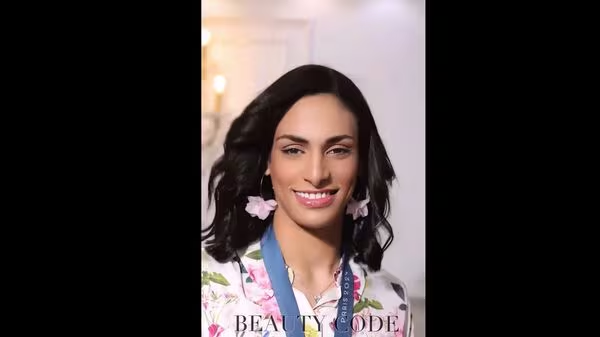
The controversy surrounding Algerian boxer Imane Khelif has taken a new turn after a leaked medical report revealed unexpected findings about her biological sex. The 2024 Paris Olympics gold medalist in women’s boxing has been at the center of intense debate, with critics questioning her gender following reports suggesting she was born with male characteristics. This article dives into the details of Khelif’s medical report, the genetic condition involved, and the broader implications for gender identity in competitive sports.
What Did Imane Khelif’s Medical Report Reveal?
In June 2023, a detailed medical report concerning Imane Khelif was published, reigniting the ongoing controversy surrounding her gender. The report, co-authored by endocrinologists Soumaya Fedala and Jacques Young, reveals a series of startling findings that have sparked further discussion.
According to the report, Khelif was born with several male characteristics, including testicles located in her inguinal canals (a condition where testicles remain in the abdomen), a micro-penis in the form of clitoral hypertrophy, and an absence of a uterus. These physical traits are consistent with a rare genetic condition known as 5-alpha reductase deficiency.
What is 5-Alpha Reductase Deficiency?
5-alpha reductase deficiency is a genetic disorder that affects the development of sexual characteristics in individuals assigned female at birth. This condition primarily impacts males but can lead to ambiguous genitalia during fetal development. Due to this deficiency, male babies may be incorrectly assigned female at birth because their external genitalia does not fully resemble typical male anatomy.
For Khelif, the condition meant that she was born with ambiguous genitalia, including a blind vagina and testicular tissue located in the abdominal area. However, as she matured, hormonal changes likely triggered the development of male secondary sexual characteristics, which may explain some of the physical traits that have fueled the controversy.
The medical report suggested that Khelif’s case of 5-alpha reductase deficiency was possibly exacerbated by consanguinity—meaning that her parents may have been blood relatives, which is a known risk factor for genetic conditions.
Why the Controversy?
Khelif’s medical revelations have sparked widespread debate, particularly in the world of sports, where issues of gender, fairness, and inclusion often collide. The controversy surrounding her participation in women’s boxing gained momentum during the 2024 Paris Olympics, where she claimed the gold medal in the women’s boxing tournament.
Critics of Khelif’s participation argue that her male biological characteristics give her an unfair advantage in competition, particularly when matched against female opponents. Some have gone as far as suggesting that Khelif might be transgender, though there has been no confirmation from her or her medical team to support this claim.
Khelif’s Olympic victory was also marred by allegations from some competitors. In one high-profile instance, Italy’s Angela Carini reportedly surrendered in the first round of their match, claiming she had “never felt a punch like this”—a comment that only added fuel to the growing fire of the debate.
Surgical Correction and Hormone Therapy Recommendations
The medical report did not only highlight the biological factors at play but also recommended potential medical interventions. It advised surgical correction of Khelif’s ambiguous genitalia and suggested hormone therapy. These recommendations are standard for individuals diagnosed with 5-alpha reductase deficiency, as they help align the individual’s physical traits with their gender identity.
While the report did not specify whether Khelif would undergo these procedures, it underscores the complexities of gender identity and biological sex. In sports, such as boxing, where physical strength and endurance are paramount, questions about the fairness of an athlete competing in a category that does not align with their genetic makeup have sparked a wider discussion on eligibility rules.
The Intersection of Gender Identity and Competitive Sports
The case of Imane Khelif highlights an ongoing issue in competitive sports: how to fairly categorize athletes based on gender. This is especially pertinent in light of advancements in understanding gender identity and biological sex. In recent years, many sports organizations have introduced policies on transgender and intersex athletes to ensure that competition remains fair.
The International Olympic Committee (IOC), for instance, has adopted a policy allowing transgender athletes to compete in the gender category with which they identify, provided they meet specific hormone level criteria. However, cases like Khelif’s, where an athlete’s biological characteristics may not fit neatly into the existing gender categories, challenge these policies.
The Ethical Dilemma: Should Khelif Have Been Allowed to Compete in Women’s Boxing?
The question of whether Imane Khelif should have been permitted to compete in women’s boxing is an ethically charged one. Advocates for Khelif argue that gender identity is a personal matter and that her victory should be celebrated as a result of her hard work and athleticism. They also point to the complex nature of her condition, noting that her experience may not align with traditional definitions of either “male” or “female.”
However, opponents contend that Khelif’s unique biological traits could offer her a competitive edge over female athletes, calling into question the fairness of her inclusion in women’s sports.
Moving Forward: The Need for Clearer Policies in Sports
The debate over Imane Khelif’s gender identity and her participation in women’s boxing illustrates the need for clearer, more comprehensive policies regarding gender and eligibility in sports. As our understanding of gender identity evolves, so too must the regulations governing who can compete in which categories.
This situation underscores the challenges that sports authorities face in ensuring fairness while respecting individual athletes’ identities. More research, better medical guidelines, and open discussions are needed to address the nuances of gender in sports, especially as the world of athletics continues to evolve in the 21st century.
Conclusion
Imane Khelif’s case serves as a powerful reminder of the complexities surrounding gender identity in competitive sports. While her gold medal at the Paris Olympics is a testament to her skill and dedication, the revelations about her medical condition add a layer of controversy that continues to fuel debate. As the conversation surrounding gender, fairness, and inclusion in sports continues, Khelif’s story will likely remain a touchstone for discussions about the intersection of biology, identity, and competition.
Ultimately, the case of Imane Khelif reinforces the importance of developing clear, inclusive policies in sports, ensuring that all athletes—regardless of their gender or genetic makeup—are given a fair opportunity to compete.