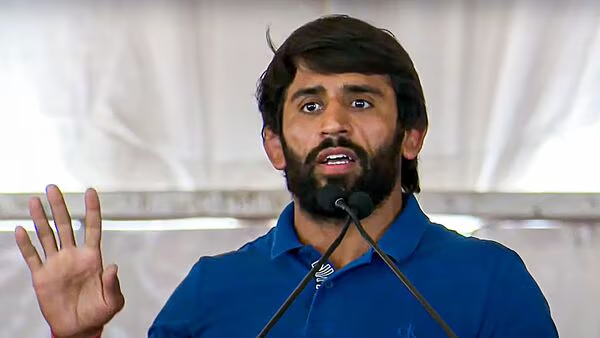
In a significant development for Indian wrestling, the National Anti-Doping Agency (NADA) has imposed a four-year suspension on Olympic bronze medalist Bajrang Punia for refusing to provide a sample for a drug test during the national team selection trials on March 10, 2024. This decision has raised serious questions about the integrity of the doping control process and its impact on athletes’ careers. Here’s everything you need to know about this controversial suspension and the key events that led to it.
Background: The Incident That Sparked the Controversy
On March 10, 2024, during the national selection trials for the Indian wrestling team, Bajrang Punia was asked to provide a urine sample for a doping test. However, the wrestler reportedly refused to comply, citing concerns over the use of expired doping control kits. Punia sought clarification from NADA regarding the kits’ validity, but NADA claims that his refusal was intentional and deliberate.
This refusal led to immediate repercussions, as NADA imposed a provisional suspension on Bajrang Punia on April 23, 2024. In addition to the suspension by NADA, the World Wrestling Body (UWW) also enforced a suspension on the wrestler.
The Legal Battle and Suspension Timeline
Bajrang Punia contested the provisional suspension, arguing that he was treated unfairly. On May 31, 2024, NADA’s Anti-Disciplinary Doping Panel (ADDP) lifted the provisional suspension pending the issuance of a formal charge notice. However, on June 23, 2024, NADA formally issued a charge notice against Punia, initiating a lengthy legal battle.
Bajrang’s defense was centered around the claim that his refusal was not an outright rejection of the drug test, but rather a request for clarification on the expired kits. He emphasized that NADA’s failure to respond to his concerns created a sense of mistrust, especially since he had experienced similar issues with doping controls in the past.
The hearings on the matter took place in September and October, but the panel ultimately found Bajrang Punia guilty of violating the Anti-Doping Code. On November 27, 2024, NADA announced its decision to impose a four-year suspension on the wrestler.
NADA’s Reasoning Behind the Suspension
According to the official statement from the ADDP, Bajrang Punia’s actions were in violation of Articles 10.3.1 of the Anti-Doping Rules. The Panel held that his refusal to provide a sample was intentional, and as a result, the wrestler was deemed ineligible to compete in any sanctioned events for a period of four years. This ruling means that Bajrang will not be able to compete in major international competitions, including the 2024 Paris Olympics, and he will also be barred from applying for coaching roles abroad.
The ruling also clarified that while Bajrang’s provisional suspension was lifted between May and June 2024, this period would not be credited toward his total four-year suspension.
Bajrang Punia’s Defense: Expired Kits and Miscommunication
Bajrang Punia has consistently maintained that his refusal to provide a sample was not a deliberate act of defiance but a request for clarification. He argued that NADA had failed to acknowledge or address his concerns regarding the use of expired doping kits during previous tests, particularly in December 2023. Punia stated that as a senior athlete with significant experience in the sporting community, he felt morally obligated to take a stand against what he perceived as negligence on NADA’s part.
In his written submissions, Bajrang Punia emphasized that he had always been willing to provide a sample, provided that NADA addressed his concerns about the expired kits. However, NADA’s stance was clear – they viewed his actions as an intentional refusal, which they believed demonstrated a “disregard” for his responsibilities as an athlete under the Anti-Doping Rules.
Impact on Bajrang Punia’s Career
The four-year suspension has significant implications for Bajrang Punia’s career. As one of India’s most successful wrestlers, the suspension means that Punia will be unable to compete in any sanctioned wrestling events, including the upcoming Paris 2024 Olympics. In addition to his competition career, the suspension also bars him from pursuing any coaching positions abroad, should he choose to shift to a coaching role.
The timing of this suspension is especially critical, as Punia had been preparing for his final Olympic campaign. His exclusion from international competitions will impact not only his career but also India’s representation in wrestling on the world stage.
Controversy and Reactions: A Divided Opinion
The suspension has sparked widespread debate among the wrestling community and fans. Some supporters of Bajrang Punia argue that the NADA’s actions were disproportionate, especially given the athlete’s concerns over expired doping kits. They claim that the decision was influenced by Punia’s outspoken stance against former Wrestling Federation of India (WFI) President Brij Bhushan Sharan Singh, with whom he had been involved in protests earlier.
On the other hand, NADA has defended its actions, stating that the refusal to provide a sample was not only a breach of the anti-doping code but also an act of non-compliance with the rules that govern competitive sports. The agency insists that such actions undermine the integrity of the doping control process, which is critical to maintaining a fair and level playing field in sports.
Conclusion: What’s Next for Bajrang Punia?
As the wrestling world absorbs the news of Bajrang Punia’s suspension, the controversy surrounding his case is far from over. The suspension is a setback for Punia, but it also highlights ongoing concerns about the doping control process in India. Whether or not Bajrang will appeal the decision remains to be seen, but one thing is certain: the outcome of this case will have far-reaching implications for Indian wrestling and the broader sporting community.
For now, Bajrang Punia’s focus will likely shift to his legal options and the future of his wrestling career, as he grapples with the challenges posed by this controversial suspension.