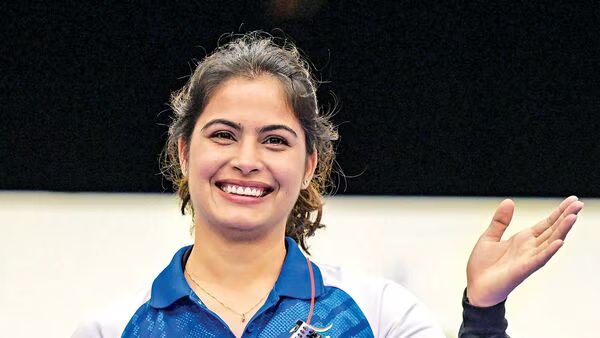
Manu Bhaker, the talented Indian shooter who made history at the Paris 2024 Olympics, has become the center of controversy after reportedly being excluded from the Major Dhyan Chand Khel Ratna Award nominations. The prestigious award, which recognizes India’s top athletes, has sparked outrage from Bhaker’s family, with her father, Ram Kishan, expressing his disappointment over the situation.
Manu Bhaker: A Rising Star in Shooting
Manu Bhaker’s achievements in shooting are unparalleled. In the Paris 2024 Olympics, she bagged two bronze medals in the highly competitive 10-meter air pistol events, solidifying her position as one of India’s finest athletes. Bhaker’s first bronze came in the women’s 10-meter air pistol event, making her the first Indian female shooter to win an Olympic medal in this category. Shortly after, she added another bronze in the mixed 10-meter air pistol team event, alongside her teammate Sarabjot Singh. Bhaker’s resilience and talent in the face of challenges, especially after a mishap with her pistol at the Tokyo 2020 Olympics, make her a deserving candidate for the Khel Ratna Award.
Father’s Discontent Over the Snub
In a candid interview with Sports Tak, Ram Kishan, Manu Bhaker’s father, voiced his frustration over the exclusion of his daughter’s name from the list of nominees for the Major Dhyan Chand Khel Ratna Award. His comments revealed a deep sense of injustice. Bhaker’s father remarked, “What’s the point of winning two Olympic medals if you have to beg for recognition? Is this the way athletes are encouraged in our country?” He further pointed out the lack of clarity and transparency in the award process, questioning the decision-making process behind the selection.
Ram Kishan emphasized that they had followed the due process in applying for the award, a sentiment that further fueled his disappointment. He also expressed concern about the bureaucratic hurdles athletes face, which, according to him, hinder true sporting excellence.
The Selection Process: Confusion and Controversy
The selection process for the Khel Ratna Award has often been a topic of debate. While athletes are allowed to self-nominate for the award, without the need for endorsements from federations or other bodies, there’s still room for the selection committee to consider candidates not part of the official nominations. This flexibility is meant to ensure deserving athletes are not overlooked, but it has raised questions about fairness and transparency.
The Khel Ratna award selection committee, headed by retired Supreme Court judge Justice V. Ramasubramanian, consists of 12 members, including notable former athletes such as Rani Rampal, former captain of the Indian women’s hockey team. However, Bhaker’s father claims that despite following all necessary procedures, Manu’s name did not make it to the initial list of recommendations. According to him, the bureaucratic system interfered with the fair selection of athletes for the prestigious honor.
A Glimmer of Hope: Manu Bhaker’s Possible Inclusion
Despite the controversy surrounding the nomination process, sources within the Ministry of Youth Affairs and Sports have suggested that Manu Bhaker’s name is still under consideration. A high-ranking official revealed to PTI that the final list of nominees had not been finalized yet and that Bhaker’s name could likely be included when the final decision is made.
“There is no final list of nominees at this point. The Sports Minister, Mansukh Mandaviya, will decide on the recommendations in the coming days. Manu Bhaker’s name, in all likelihood, will be included in the final list,” the official said.
The Impact of Awards on Indian Athletes
Awards like the Khel Ratna serve as a recognition of an athlete’s hard work, perseverance, and achievements on the international stage. They provide a much-needed morale boost, not only to the athletes but also to those who aspire to follow in their footsteps. For someone like Manu Bhaker, who has consistently demonstrated outstanding talent in shooting, such recognition is essential for motivating future generations of athletes.
Bhaker’s exclusion from the nomination list raises significant questions about how athletes are celebrated in India. Her father’s frustration is understandable, as he sees the lack of recognition as a systemic problem that affects not only his daughter but also the larger sporting community.
A Call for Reform and Fairness in the Award Process
The controversy surrounding Manu Bhaker’s Khel Ratna nomination sheds light on the need for reform in the award selection process. If India is to continue to encourage its athletes and foster a sporting culture that thrives on merit, transparency, and fairness must be at the heart of all such decisions. Athletes should not have to struggle for recognition after achieving remarkable feats on the world stage.
Conclusion: Will Justice Prevail for Manu Bhaker?
As the nation waits for the final list of nominees for the Major Dhyan Chand Khel Ratna Award, the spotlight remains on Manu Bhaker and the growing demand for a fair and transparent system of recognition for India’s athletes. While Bhaker’s father continues to express his frustration over the process, there is still hope that the final list will reflect the true achievements of deserving athletes like her.
The Ministry’s decision will not only determine Bhaker’s fate but also serve as an indicator of how the Indian sports ecosystem values and rewards its stars. It is clear that without proper recognition and support, India risks losing talented athletes who might feel undervalued and disheartened by the system.