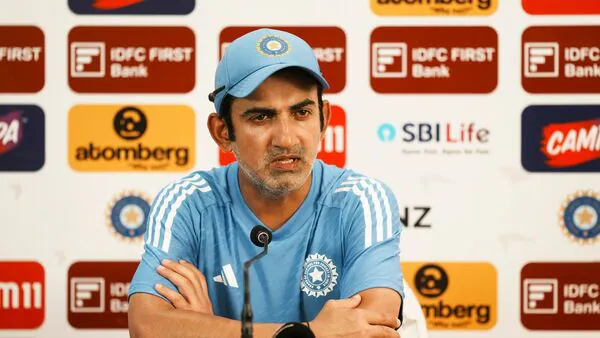
Gautam Gambhir, the newly appointed head coach of the Indian cricket team, is currently under immense scrutiny following unprecedented whitewashes against New Zealand and Sri Lanka. The recent 3-0 defeat to New Zealand at the iconic Wankhede Stadium marks India’s first-ever home whitewash, raising serious questions about Gambhir’s coaching strategies and team performance.
A Troubling Start to Gambhir’s Tenure
Gambhir took over the reins of the national team after India’s T20 World Cup victory in the West Indies, succeeding Rahul Dravid. His arrival was met with optimism, bolstered by the inclusion of a coaching staff that features familiar faces like bowling coach Morne Morkel and assistants Ryan Ten Doeschates and Abhishek Nayar, who have all worked alongside him in previous roles.
Despite these advantages, Gambhir’s tenure has been anything but smooth. The Indian cricket team, traditionally a powerhouse on home soil, has faltered under his leadership, raising concerns about tactical decisions and player management. Critics point out that Gambhir had greater freedom in selection matters compared to his predecessors, yet the results have not reflected this potential.
Key Players and Selection Decisions
During his time in charge, Gambhir has made notable selection choices, including the introduction of young talents like pacer Harshit Rana and all-rounder Nitish Kumar Reddy, both of whom debuted in T20s last month. However, the team’s inability to secure wins has overshadowed these promising moves. With significant stakes at play, the performance of these new players will be closely monitored as the team looks to rebuild confidence.
The Upcoming ‘Acid Test’ in Australia
As the Indian squad prepares for a challenging tour of Australia starting November 10, Gambhir faces what many are calling an ‘acid test.’ The upcoming Border Gavaskar Trophy is critical for the team’s aspirations in the World Test Championship. Reports suggest that India needs to secure at least four victories to qualify for the final, putting added pressure on Gambhir to demonstrate effective leadership.
Senior players such as Virat Kohli, Rohit Sharma, Ravichandran Ashwin, and Ravindra Jadeja will also need to step up under Gambhir’s guidance. The dynamic between Gambhir and these seasoned cricketers will be crucial, as their experience and performance can significantly influence the team’s outcomes.
Conclusion: The Road Ahead
Gautam Gambhir’s coaching journey has been marked by challenges, but it also presents an opportunity for growth and learning. The upcoming series in Australia will be pivotal not only for his career but also for the future of Indian cricket. Fans and analysts alike will be watching closely to see if Gambhir can rally his team and deliver the results needed to restore India’s cricketing glory.
As the BCCI evaluates his performance in the coming weeks, one thing is clear: the pressure is on, and the stakes have never been higher for the former player turned coach. Will he rise to the occasion or fall under the weight of expectations? Only time will tell.