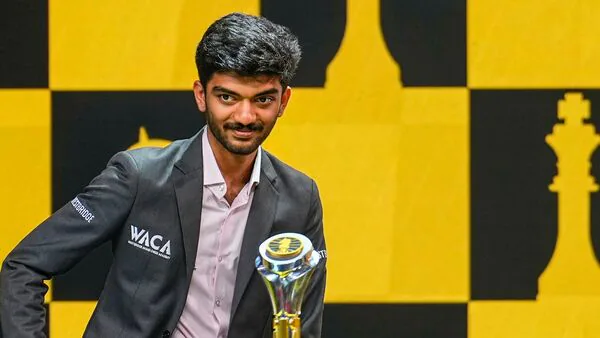
In a groundbreaking achievement, 18-year-old Indian chess prodigy D Gukesh has become the youngest-ever World Chess Champion, defeating reigning champion Ding Liren in the 2024 World Chess Championship held in Singapore. This monumental victory has made waves in the chess community, with praise pouring in for Gukesh’s remarkable skill and poise. However, not all reactions have been positive, as some of the chess world’s top figures, including Magnus Carlsen and Levon Aronian, have expressed concerns over the current state of classical chess.
D Gukesh’s Historic Victory
Gukesh’s win in the World Chess Championship is a testament to his exceptional talent and relentless determination. Defeating Ding Liren, who was at the peak of his game, has earned the young grandmaster international recognition. His victory has added to India’s growing dominance in the world of chess, following in the footsteps of fellow grandmasters like Viswanathan Anand.
However, while social media and chess enthusiasts celebrated his victory, there have been mixed reactions from some of the sport’s legends. Notably, Magnus Carlsen, the former World Chess Champion from Norway, and Levon Aronian, the Armenian-American grandmaster, have raised concerns about the format of classical chess and its ability to truly reflect a player’s skill.
Magnus Carlsen Critiques the Relevance of Classical Chess
Magnus Carlsen, who dominated the chess world for nearly a decade before stepping down from his World Chess Championship title, expressed reservations about the relevance of classical chess as a measure of a player’s true abilities. He pointed out that the World Chess Championship final between Gukesh and Ding Liren resembled more of a second or third-round match in an open tournament rather than the pinnacle of competitive chess. According to Carlsen, rapid chess is a more “pure” form of the game, offering a better gauge of a player’s skill.
Carlsen’s critique highlights the growing shift towards faster formats in chess, with online platforms like Chess.com and Lichess seeing increased popularity for formats such as blitz and bullet. These rapid time controls are often seen as a more exciting and accessible way to engage with the game, while classical chess with its long time controls can sometimes lead to more methodical and drawn-out matches.
Levon Aronian Joins the Debate: Calls for Change in Chess Rules
Levon Aronian, another chess great, echoed Carlsen’s concerns in a recent podcast appearance on the Take Take app. Aronian criticized the current state of classical chess, suggesting that it has become too focused on drawing rather than decisive, exciting play. He drew parallels with other sports, explaining how changes in rules in wrestling and boxing have led to less engaging competition. He stated, “In Greco-Roman wrestling, when you change the rules, you make them concentrate on getting the points, it becomes much less of a sport like boxing. Why is MMA so much more exciting? Because it’s basically freestyle chess, whereas classical boxing can turn into a very boring, technical game.”
Aronian’s comments reflect a growing concern that classical chess, as it stands today, might not be as thrilling to watch as other high-paced sports or even the faster-paced versions of chess. He believes that the emphasis on neutralizing opponents and aiming for draws has become less engaging for fans, who want to see players battling for clear victories.
Gukesh Responds to Criticism
Despite the criticisms from Carlsen and Aronian, D Gukesh took a diplomatic approach when asked about the comments in a post-match interview. The young champion acknowledged that some of the games during the World Chess Championship may not have reached the level of quality that he personally expected. However, Gukesh emphasized that the World Championship is about more than just pure chess skill—it’s about resilience, character, and willpower.
Gukesh commented, “I get that maybe in some of the games, the quality was not high, but I think the World Championship matches are decided not purely by chess but by who has the better character and who has the better willpower. And I think those qualities, I did show quite well.” He went on to express that the new experience of competing at such a high level brought unique pressures, which may have contributed to the lower-than-expected quality of some games. Gukesh’s response reflects maturity beyond his years, showing that he understands the multifaceted nature of chess competition.
The Future of Classical Chess: A Call for Evolution
While Gukesh’s win signifies a new era in chess, the debate around classical chess continues. Magnus Carlsen and Levon Aronian’s criticisms underscore a fundamental issue facing the sport today: the need for evolution. Many believe that chess must adapt to changing times and offer a more exciting experience for both players and viewers alike.
There is a growing conversation within the chess community about exploring alternative formats that maintain the strategic depth of classical chess while introducing elements of excitement and unpredictability found in rapid formats. The challenge lies in finding a balance that respects the tradition and depth of classical chess while making it more engaging for modern audiences.
Conclusion
D Gukesh’s World Chess Championship victory marks a historic achievement, but it has also sparked a larger conversation about the future of the game. While the young champion’s triumph is celebrated, the criticisms from Magnus Carlsen and Levon Aronian reflect the broader concerns about the relevance of classical chess in its current form. As the chess world looks forward, the question remains: can the game evolve to keep pace with the demands of a new generation of players and fans?
As the debate rages on, one thing is certain—chess is entering a new phase, and Gukesh’s victory will undoubtedly play a key role in shaping its future. Whether through changes to the rules or the rise of new formats, the world of chess is poised for exciting transformations in the years to come.