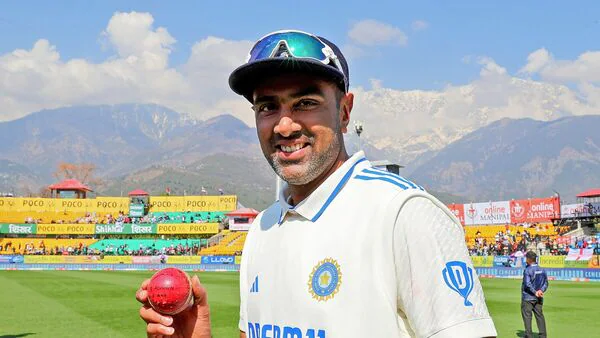
Ravichandran Ashwin, the celebrated Indian off-spinner, recently made headlines when he announced his retirement from international cricket in the midst of the Border-Gavaskar Trophy in Australia. This unexpected move sent shockwaves through the cricketing world. While Ashwin’s decision raised several eyebrows, his reasons for stepping away from the game are deeply insightful and reveal a thoughtful approach to his illustrious career.
A Career Marked by Consistency and Creativity
Ashwin, now 37, has been an integral part of the Indian cricket team for over a decade, becoming the seventh-highest wicket-taker in Test cricket history with an impressive 537 wickets in 106 matches. Despite his immense success, Ashwin decided that it was time to move on when he felt that the creative spark that had driven his career was no longer there.
Speaking on the Sky Sports Cricket Podcast with Nasser Hussain and Michael Atherton, Ashwin explained the internal struggle that led him to this decision. “I did contemplate [retirement] a few times. For me, the day I woke up and felt the creative side of me didn’t have a future or direction, that would be the day I would give it up,” Ashwin revealed. “I suddenly felt that the creative side didn’t have a lot of upsides to explore.”
This candid reflection demonstrates the deep connection Ashwin had with his craft. As a bowler known for his variety and tactical acumen, the loss of creative drive was a key factor in his decision. His ability to continually evolve and surprise his opponents was a hallmark of his game, and when that spark began to fade, he knew it was time to step aside.
Embracing Change Without Attachment
A defining feature of Ashwin’s career has been his detachment from the trappings of fame and accolades. He admitted that he had never been one to cling to past achievements or bask in the glory of his successes. “I’ve never felt insecure in life. I don’t believe what is mine today is going to be mine tomorrow,” Ashwin shared, emphasizing his philosophy of living in the moment without attachment to external validation.
This mindset is reflected in his approach to retirement. Ashwin expressed that he didn’t want a grand farewell or a hero’s send-off, common for many players at the end of their careers. “I always wanted to leave things behind as nonchalantly as I could because I do not believe in people celebrating me,” Ashwin said. “The game always stood ahead of me, all the time.” His humble and selfless approach shows that, for him, cricket was never about personal celebration, but about the game itself.
A Quiet Yet Impactful Departure
Ashwin’s decision to retire during a prestigious tournament like the Border-Gavaskar Trophy further underscores his desire to exit the stage without fanfare. While many players make their retirements the focal point of their careers, Ashwin’s understated exit is a testament to his character. He prioritized the game over personal attention, focusing on the team’s needs and legacy rather than indulging in the spotlight.
Despite his quiet departure, Ashwin’s impact on Indian cricket is undeniable. As one of the best spinners of his generation, he played a crucial role in India’s rise to prominence in world cricket. His record of 537 wickets in Test matches speaks volumes, and his influence on Indian cricket, particularly in the subcontinent, will be felt for years to come.
Legacy Beyond Numbers
While Ashwin’s numbers speak for themselves, it’s his approach to the game, his discipline, and his ability to adapt that has cemented his place in cricketing history. As the second-highest wicket-taker among Indian bowlers (behind only Anil Kumble), his legacy is secured, not just in the statistics, but in the way he approached the game — with integrity, humility, and a deep respect for the craft.
Moving Forward: What’s Next for Ashwin?
Ashwin’s retirement leaves a gap in Indian cricket, but his impact will continue to influence the next generation of spinners. His commitment to his craft and his philosophy of detachment could inspire young cricketers to focus not just on the numbers, but on the art of the game itself. Moving forward, Ashwin is expected to stay involved in the sport, perhaps in a coaching or mentoring role, sharing his vast experience with aspiring cricketers.
As we bid farewell to one of India’s greatest spinners, Ashwin’s departure serves as a reminder that cricket, much like life, is a journey marked by constant change. The game itself remains timeless, and Ashwin’s contribution will continue to resonate in the years to come.
Conclusion
Ravichandran Ashwin’s retirement marks the end of an era for Indian cricket. With his humble yet impactful career, Ashwin leaves behind a legacy defined by consistency, creativity, and respect for the game. His decision to retire at the peak of his powers, driven by a sense of creative stagnation, is a testament to his wisdom and commitment to the sport. As the cricketing world bids him adieu, Ashwin’s story will remain an inspiration for generations of cricketers to come.